Saturday, July 14, 2012

Twigas...Supermodels of the bush


If you want to see Giraffe (or Twiga in Swahili) then Selous is the place for you, we often refer to Selous as "Giraffic Park" because we see so many of them, interestingly the population of giraffe in Selous only occurs north of the Rufiji river where we are in just 10% of the reserve, south of the river, in the remaining 90% of the reserve, there are none. No one can really explain why the giraffe do not occur south of the river, it does not seem to be an issue of habitat as the habitat is similar just to the south of the river and along the western side of the Selous, it seems to be the impassable river that prevents their occurrence in the south, but even the river is not a real explanation as there are plenty of dry season shallow areas or sand bars along the river where the giraffes could pass if they wanted to. The large giraffe population has grown from the few individuals that in was in the early 1960's to thousands nowadays, because they are well protected in the reserve which has ensured steady population growth and of course they are Tanzania's national animal!

Herds or journeys of giraffe as we call them are fascinating to observe in the wild, when they run they do so in a graceful 'slow-motion' like gallop, when they drink they splay their legs so that their long neck can reach the water, when they fight the sound of their necks clashing is incredible and the force even more so, one giraffe was once spotted bolting an eland 20 meters into the distance!

We are lucky to be with a great population of such beautiful and elegant animals.

Monday, June 25, 2012

June's little gems


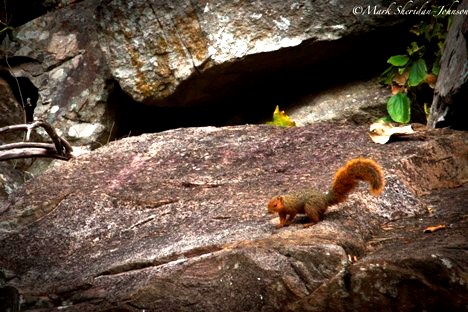
Below is a photo of a red bellied coast squirrel snapped on the rocks during one of our signature boat trips to Stiegler’s gorge, his rich auburn colour stood out beautifully in the surroundings of the large boulder like rocks which are characteristic of the gorge.

 Fresh starts and the new season have brought us plenty of newborn sightings, 2 particular new born species demonstrating to us their genius camouflage to help see them through their first vulnerable days in the wild world. The first is this immature Kitlitz’s plover, as you can see he blends in perfectly with the speckled sand which surrounds him, he is not alone though, he also has protective parents around him all the time, just the other day we saw them mobbing 2 saddle billed storks getting a bit too close but even under these watchful eyes anything can happen in nature, they may be off hunting looking away for a minute so this camouflage gives the chicks extra protection. They are precocial chicks having to learn quickly to be mobile on their feet, as they don’t grow up in the safety of a nest like many other bird species, again the camouflage helping to secure their survival.
  The second is this young crocodile spotted on a shady spot along the river, blending brilliantly in with all the colours that surround him, these little snappers can fall prey to amongst other predators the powerful fish eagle, which is ever present along the shores of the rufiji, even one of its very own species, adult crocs may try to eat the little ones, this young crocodile remained motionless and statue like as our boat approached and left, he did not flinch.
Our resident hippo pods have been entertaining us daily, we also have plenty of new hippo tots dotted up and down the river and lakes, always under the extremely watchful eye of mother, one particular mother and calf spend most of these cool June mornings napping away on the newly exposed sand bank in front of the mess, we often see them coming back from a hard nights feed early in the morning and collapsing into their soft sandy beds for the morning, that’s the life!...


Friday, June 1, 2012

One of the last great wildernesses

Boating on the mighty Rufiji River
                                                                       
Pel's Fishing owl
                                    
Male Leopard resting in a small leafed Teminalia
                               
Back lit jets of mist from the Hippos exhaling.

The large Nimbus clouds have faded, all the dust settled after the long rains, there is a freshness about Selous, the dry season is closing in fast, still time though for the animals to stock up on the nutritious flora that is scattered all over the rugged terrain.The view from the lodge this year is different, all the vegetation the river that dumped the previous year on the sandbanks has now been all washed away, some of them huge trees which the Rufiji claims every year.

On a trip up to Stieglers gorge, we managed to spot the elusive Pel's Fishing Owl pictured above, it is considered a mega tick amongst birders and took me 8 years in Selous to see it.

We had a wonderful sighting of a male and a female leopard with an Impala kill in a tree, the female was less relaxed than the male, which is unusual for Selous.

We look forward to seeing you here in the Selous, one of the last great wildernesses.

The Selous Team.


Friday, March 23, 2012

Stiegler's Gorge

Setting off to the Stiegler's gorge by boat early in the morning.
White fronted Bee-eaters
Yellow Baboon
A Crocodile we have to move off the sandbank so we could have breakfast!
 Mussa preparing breakfast
Everyone enjoying breakfast
Getting ready to head back to camp
African Golden Weaver building a nest

Another highlight of staying at Sand Rivers is venturing to up the Rufiji River to Stieglers Gorge, the gorge was named after a Swiss explorer who was killed by an elephant there in 1907. The mighty Rufiji River is at some points over a mile wide, it is the biggest river in East Africa, further up stream from the gorge the Ruaha River and the Kilombero River rivers meet and from that confluence is born the Rufiji river it travels east from there to the Indian Ocean, the gorge at some points will only be 50m wide, so it must be very deep to allow all that water to pass through. 

We set off early in the morning with a packed breakfast, to enjoy the cool air and wonderful light. The sandbanks are constantly changing, making it a challenge for the boat guide. 

On the way you can expect to see a wide variety of birds and mammals, the highlights would include Leopard, Lions, Pel Fishing Owls and more Hippos and Crocs than you can shake a stick at.

16kms up steam from the camp and we are well into the Gorge, the banks rise steeply, evidence of rock slides are everywhere. After finding a good spot for breakfast, the Crocodiles need to be chased back into the river. 

After enjoying a lovely breakfast, we started to head back, the driver turns off the engine so we can drift down stream and listen to all the noises. All in all the wonderful adventure on a remote and beautiful river.


Wednesday, March 14, 2012

Fun in the rain

Thunder storms are becoming a nightly event here at Sand Rivers, the weather systems have started to come from the west. At dinner the other night we had to move the dinner table to the entrance of the Lodge, but the wind was so strong it was rather difficult to eat our soup without in ending up on our laps, these storms don't last long, the wind dies down quickly and the rain settles in. Before the water has had time to soak into the almost saturated earth, the puddles covering the black cotton soil (very fine black clay) make for fun game drives as the Land Rovers slip and slide their way though the mud. Fresh footprints of the animals litter the ground, the Hippos plough their way through the earth leaving very distinctive narrow trails, the Giraffes unable to move rapidly in slippery mud for fear of falling, have to be cautious not to be seen by a keen eyed Lion. Dung beetle use this time of year clear up all the waste left by the animals, the soft ground makes it easy to dig into, taking their dung under ground, keeping their eggs safe from predators.

The first picture is Lightening over Mtundussi hill, which can be seen from the lodge.

The second picture is Lioness near Lake Tagalala.

The third picture is two Grey Herons fighting over territory.

The last picture is a female Bush Buck.

Wednesday, February 29, 2012

Hooked on the Selous

                                                           Chloe with the catch of the day!

One of the best watered parks in Africa, the Selous offers more than just the opportunity to hop in a Landrover and go on a game drive. The main life line of the Selous is the Rufiji river, it with its tributaries are thought to contain over 40,000 Hippos and I would not dare to estimate how many Nile Crocodiles bask on its banks. The Crocodiles enjoy a healthy diet of fish, and there is no shortage of them.

One of the more pleasant ways to spend an afternoon in the Selous is fishing, a short boat trip will take you to a prime fishing spot, take your shoes off and jump out on to the sand bank. No experience needed, the rod will be set up and if you want even cast for you! Then you sit back with a cold drink, watching the sunset over the Kipalala hills, listening to the sound of the Hippos and the African Fish Eagles.

You might even catch a fish.